Werifesteria
Listen
This enchanting collection of songs takes listeners on a vivid auditory journey that unfolds an imaginary adventure through the forest, from dawn till dusk, culminating in the shine of moonlight.
Werifesteria embodies Indra’s signature blend of melodic texture and evocative sounds, inviting audiences to experience nature’s beauty and mystery.
Each track immerses listeners more deeply into the story, as the EP progresses through lush soundscapes that mirror the shifting moments of a day in the wild.
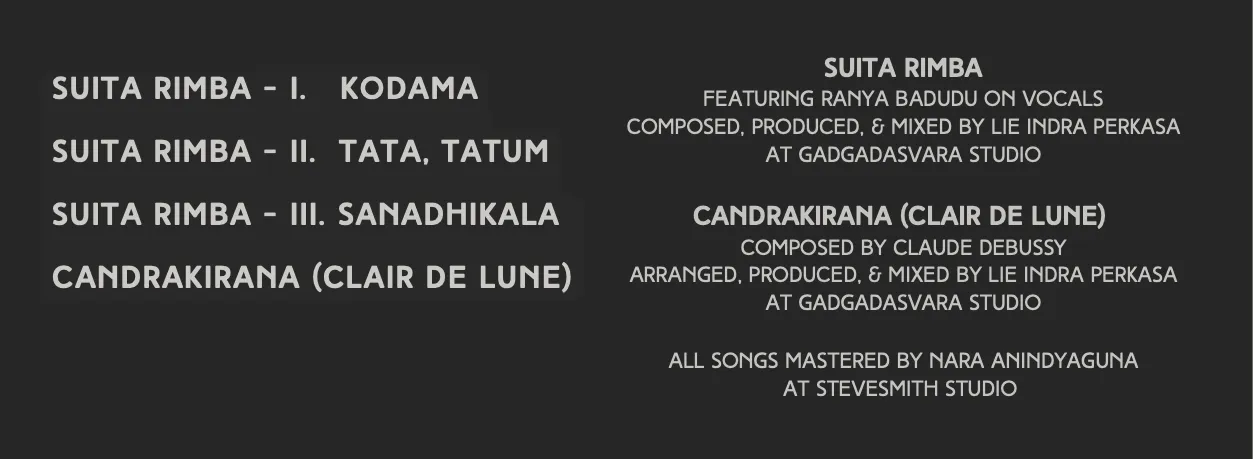
Suita Rimba

is a three-part composition, based on my improvisations on Monome Norns, a sound computer device, using scripts from the Lines Community. The scripts utilized here are, Flora by Jonathan Snyder & Less Concepts by Dani Derks.
Kodama was originally a commissioned work from Tromarama—an Indonesian artist collective whose works explore the intersection of technology and everyday life— for their installation piece The Lost Jungle at Museum MACAN in Dec 2021 - May 2022.
While working on Candrakirana, I came across these unused recordings of my improvisation for The Lost Jungle and I saw a potential for further creative use. So I started adding some layers of instruments and other sounds that I saw fit. Then slowly, a story took shape in my imagination, depicting an adventure in the forest.
The first part, Kodama means forest spirits in Japanese, derived from one of my favorite Ghibli movies, Princess Mononoke. This first part represents a morning vibe in a forest.
The second part, Tata, Tatum are meaningless words that my son frequently speaks as he’s learning to talk. This second part represents midpoint/midday in the forest.
The third part, Sanadhikala, is a Sanskrit word that means “in between time”, reflecting the transition from day to night. This third part represents late afternoon to night in the forest.
Kodama and Tata, Tatum were featured on Reuben Torino’s video work, Fragments of Home
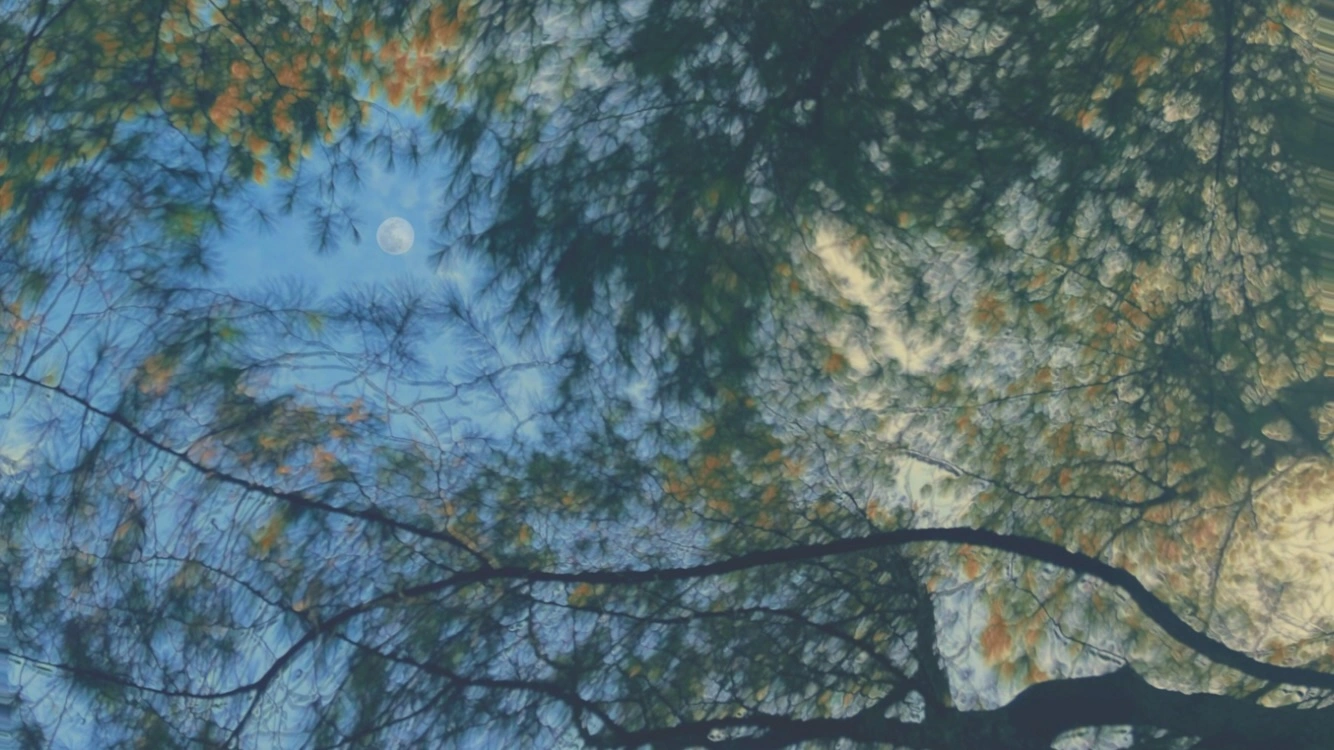
Candrakirana (Clair de lune)
Clair de Lune has always been a special piece for me. It was my gateway drug into the classical music world. The first time I heard it, back when I was in college, it just clicked right away and resonated with my imagination about what I wanted to achieve in music composition.
For a long time, I’ve always wanted to create a new interpretation of classical music compositions from some of the composers that I really love and that continue to inspire me to this day, such as Debussy. However, I never had the time nor the chance to do it.
After my son’s 1st birthday, I suddenly felt the urge to do it, the urge to pass down something meaningful to him. I thought perhaps a good vibration will do. So I decided to give it a try. There’s nothing fancy or groundbreaking about what I did here. I just used what I felt and what I think represents the era I’m living in now.
Candrakirana is my way of paying tribute and expressing gratitude to Debussy, as well as celebrating the 120th anniversary of Clair de Lune since it was first published.
Track List
| # | Title | Duration | ISRC |
|---|---|---|---|
| 1 | Suita Rimba I. Kodama | 04:14 | QZHN72530268 |
| 2 | Suita Rimba II. Tata, Tatum (feat. Ranya Badudu) | 02:52 | QZHN72530269 |
| 3 | Suita Rimba III. Sanadhikala | 02:33 | QZHN72530270 |
| 4 | Candrakirana (Clair de Lune) | 07:15 | QZHN72530271 |
| Total Duration | 16:54 | ||